Gender ideology and the backlash of individual free expression of sexualities and genders have become more popular all over the world in the last decades. Pushed by religious beliefs, political interests and power relations, anti-gender movements and campaigns found fertile soil in a Western society that is trying to change but is struggling while attempting to find a balance between cultural freedom and a past that is extremely eradicated in several institutions.
Born also as a reaction to the UN conferences in the nineties in Cairo, in 1994, and Beijing, in 1995, the anti-gender movements find their roots in a well-blended mixture of catholic background and populist right political realities, almost on the edge of an illiberal point of observation. The condemnation of diversities is the solid basis for the present and past discrimination and, as scientific racism has been used for centuries to justify the necessity of colonising minorities, it can also approach the gender theory with the same sophistication in order to find, again, a non-scientific explanation for the control over bodies and sexualities that is being exercised on individual choices. (Ngugi, 1993)
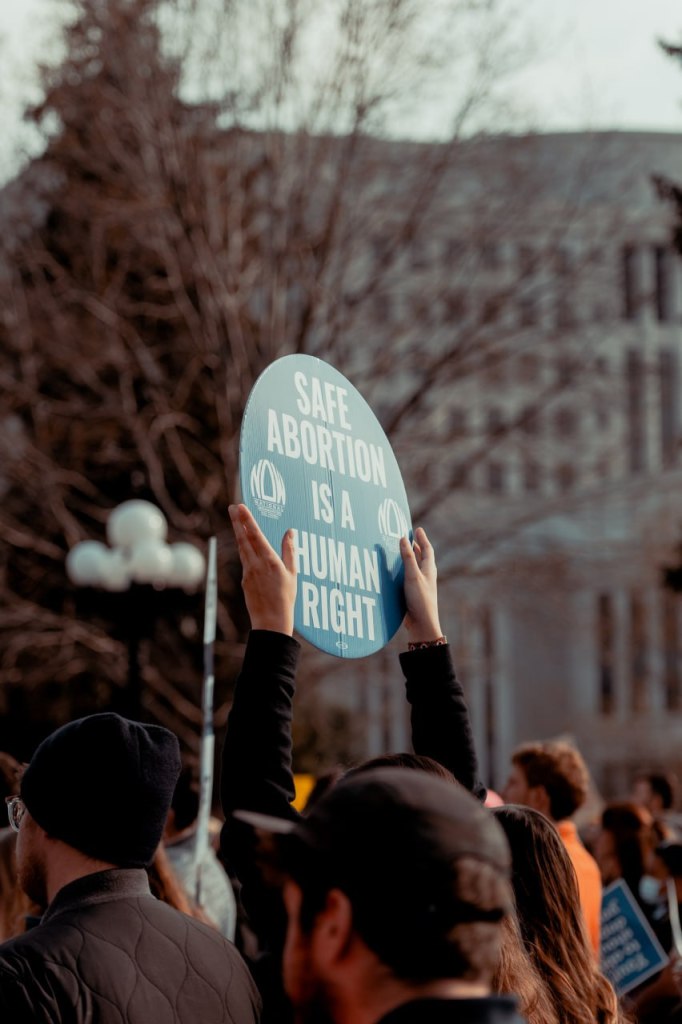
In this scenario, because of appropriate modalities of expression and on the focus on mainstream subjects in which common people would be able to identify, both political and religious currents promoting these discriminatory points of view are more and more supported in several countries around the world, from Western countries to developing ones. Not only authoritarian personalities promote the denial of gender identity and sexual health rights, but the increasing support received from the population is leading to a dangerous and restrictive wave impacting on human rights. As a consequence, in this same environment, it is possible to observe both movements claiming freedom of expression and ones demanding for a riddance to religious virtues.
It might be underlined that, what is mostly perceived as a promotion of old times and sound principles, at a more attentive analysis, can be identified, at least in the Western context, as a political strategy (Paternotte, 2018) by the two major institutions that, through the centuries, have both fought and supported each other: The Church and the Government, with shades developed according to political and religious necessities specifically required over the centuries.
An interesting overview regarding the main aims of the anti-gender campaigns is proposed by Paternotte and Kuhar (Paternotte, 2018) who identifies in the genders themselves, same sex marriages and sexual and reproductive health the focus of these movements, which claim the danger in which democracy lays because of lack of morality and gender ideological colonisation.
The treat to a rightful and representative Government is often mentioned in the gender ideology, both by religious entities and by political wings, in particular the right one. This trend is noticeable and particularly marked in countries of the ex-Soviet Union where queer movements and a more liberal sexual approach are seen as almost imposed by the UN, mentioning a new colonisation (Korolczuk, 2018).
The interesting use of terminology connected with colonialism and post-colonialism led to the use of a hidden scientific racism that is the same approach used over centuries to condemn minorities, both culturally and physically. This same wave has conducted, since the beginning of the colonial era, to the idea that diversities were not different sides of the same coin, but on the contrary where inferior manifestations, with the need to be changed, educated as well as transformed into a more civilised one.
The same colonial approach used for centuries in order to provide an appropriate and decent explanation for racial oppression, that comprehended not only the colour of the skin and the indigenous traditions, but also the shape of bodies and the vision of women as individuals with promiscuous sexuality (Ngugi, 1993), is now used to both condemn and take advantage of the gender issues.
In fact, in the last few decades racism has been condemned, not only from national and international laws and establishments, but also by religious and catholic institutions, with the proclamation of equal rights for every race; however, if the issue concerning racial minorities has been overcome, the recognition of sexual minorities and of equal gender rights is still on the edge.
The colonisers now feel colonised by a “theory” that isdefined as unnatural and immoral, with what Pope Francis defined as a “ideological colonisation” (Pope Francis, 2017).
As previously mentioned, anti-gender campaigns do not focus exclusively on genders, reproduction health and education are their main targets as well. As an article about gender theory in Bulgaria reports (Darakchi, 2019), it has been understood the relevance that, especially in this new technological era, education and accessibility to that has. Sexual education has been identified as a constitutional right and understanding the impact that its limitation would have on new generations is an extremely relevant step (WHO, 2018). Restraining the accessibility to a proper and scientifically based instruction is the key for a community that can be more malleable to external and imposed stimuli. And, if on the one hand in Europe 90% of households have access to internet (Eurostat, 2020), on the other hand the lack of a proper cultural example can cause the failure of independent and critical thought, independently from the resources available. Schools are the institutions that have the scope to provide education based on evidence, on the ability to invite individual to create their own critical attitude. Restraining notions that would allow people, and especially young generations, to be able to live in the current and future reality is extremely dangerous, creating limited minds, scared by new overtures.
The most common explanation given by anti-gender campaign’s supporters is based on moral issues, condemning both the sin and the sinner, with a particular emphasis on the first ones. Pope Francis, in 2017, remarking his position and as a consequence the one of the Vatican, despite the acceptance of homosexual people as sons of God, defined sex marriages themselves as dangers for the anthropological family, underlining that not only this union would not be receive the blessing of the catholic church, but also should not be allowed to be sanctioned in any other institution.

Only this year, he opened to homosexual couples, claiming their right to be part of a family, and he announced his blessing for civil unions, even if quickly rectified by the Vatican few days later as not a shift in the traditional doctrine (CNN, 2020).
However, even if talking about morality the obvious link is the one that is possible to make with the religions and in particular with the Catholic one, the issue is more complex that just a discrimination based on Sodoma and Gomorra. The intricated political implications at the basis of such a discrimination of gender minorities and sexual freedom are connected with political strategy where morality itself is only a quick and effective method to raise the audience’s attention, especially from the older generations: their use for such purposes can be defined almost as a real political propaganda.
Anti-gender campaigns are often placed side by side with the right wings of the political scenario, and this can be observed in several European, and not only, countries: Italy, Poland, Hungary, Brazil are only some examples. A clear illustration has been reported once again by Darakchi regarding the Bulgarian situation (Darakchi, 2018).
The gender ideology movement started as a political mobilisation, supported by the populist right wing of the government, enacted to raise the consensus of a population that for decades was under the Soviet Union regime and that was perceiving the gender revolution as a way of the West to impose the western culture over the nation. Sexual education was not mentioned at school, as well as the different meanings of the terms “sex” and “gender”, especially because applied to an abstract concept that was, and still is, not easy to articulate.
Another illustration of the difficulties that were faced in order to better understand gender rights and equalities in a post-Soviet Union country is given by the article written by Fodor (Fodor, 2006) based on a research conducted in Hungary in the nineties; the results show the relevance, and almost the relegation, on women inside the household especially in a poverty condition, with the dominance of hegemonic masculinity inside the familiar unit for the handling of money and public opinion of social condition.
This same hegemonic masculinity is not only openly reported in the article but also desired and promoted by the supporters of gender ideology as the one undermining the free expression of different types of masculinities, leading to a toxic environment for who identifies themselves in the male gender.
The consequences of toxic masculinities on men has been noticed in several studies, one of them reported by the WHO which claims the increased rate of men’s suicide (WHO, 2014). Another report investigates the same kind of issues faced by whoever not included in the standard of hegemonic masculinity, reporting both percentages and reasons why mental health can be compromised in name of such social constructions (Addis, 2016).
The anti-gender nationalist rhetoric is built extremely smartly, being effective in every social stratum, catching consensus especially in lower ones, where education is not so often easily accessible. Given the social, political and especially economic crisis of the last decades, it is easy to understand that people can be, in an overly simplistic way, angry at the system. It is palpable on virtual platforms, on newspaper and especially in socially and concrete places where people used to reunite.
Moreover, if in the past the stream of knowledge was more limited, with the current technologies it is extremely quick. When people are upset, especially when in a practical way there is nothing that the individual can do that can give an immediate relief, the managerial class is the target.
It is, however, also known that governments in crisis situations need to provide a scapegoat, essential to deviate the anger of the community; the deviation of anger to the Jews community before the second world war can be explicative of the same. If, for the right wing itself the immigrants have always been the primary choice, in the last few years, in order to maintain high populism, the idea of the Christian morality stepped in, letting the attention be moved to women, gender acknowledgment and equality and reproductive and sexual health.
What can be generally considered different from the ordinary is the perfect target in crisis situations, as the cause of the problems can finally be directed to something, or someone, that would not receive support from external units.
For this purpose, anti-gender campaigns have been proven to have extremely effective communication strategies, both on public and concrete spaces and on the social media ground. The techniques used can be sometimes compared to the ones used by LBTQI+ movements, such as parades and community mobilisations (Paternotte, 2018). As most of the political campaigns, also the anti-gender ones expose the need to reach as much people as possible and, as was done before the gaining ground of social platforms, the reunion of people in parades and protests has been effective.
One of the main examples is the so-called “March for Life” that takes place every year in Washington D.C. in order to protest against abortion organised by the March for Life Education and Fund. The same kind of event is organised in different European countries, such as France, Hungary and Poland.
Of a smaller impact on the whole community but extremely impactful is the work these organisations can do in front of public places where, for example, the termination of pregnancy in performed, such as hospital and health clinics, claiming for the rights of the embryo directly to women who are having the access in those structures. Those events often do not base their actions on facts themselves but trying to affect the individual’s morality more than ethics, leveraging on Christian values such as the murder of a person as a sin and implying that women who decide to interrupt the pregnancy are murderers.

The same pattern can be observed in defence of the traditional families with rallies organised such as parades supporting it and declaring the sickness of SSM or couple not married. These same events, usually organised by associations supporting the Christian morality, can be observed once again in different European countries, such as Latvia, Hungary, Czech Republic, with an increased number of supporters over the years.
This propaganda, which is designed to impact of Christian, in particular Catholic, conscience, has been proved to be successful also on the web, with tweets, posts and hashtags created especially for that. The hashtag #prolife has 1.3 million followers on Instagram at present, #abortionismurder 148 thousand, while #abortionishealthcare has only 48.2 thousand followers on the same platform.
The web is wisely used to connect people pushing on conscience and guilt and the use of images reporting embryos, foetus and queer people mocked for their personality is catchy in this movements. A common and popular theme used in this kind of communication is the one reporting children in both images and speeches.
The impact that, anti-gender campaigns claim, gender acknowledgement and equality have on children is always reported as shocking and dangerous. In a study published in 2010, it is reported how the main arguments raised against same sex couples as dissolute parents are linked with the prejudices that children would face when in public life and that homosexual or queer couples are perceived as sexually transgressive and promiscuous and so not adapt to raise a child (Withers, 2010)
Nevertheless, if binary gender equality is an issue whose opposition is mainly constituted by anti-gender movements, the common thought is that feminists fight and claim gender equality not only for women but for every gender outside the non-binary identities.
In reality opposition is not only made of Catholic exponents and of right-wing populists but also some branches of groups of feminists made their position about queerness and transsexuality extremely clear. When the first wave of feminism started, it was especially addressed to white women and the turning point came with an intersectional approach, however at present there are some radical feminists who deny the woman identity to transgender people who identity their gender in the feminine one. Radical feminists claim the biological component when defining the female gender, requiring a match between sex and gender.
The generational passage between the second and the third wave of feminism enshrine a new approach to gender fluidity and emphasize the necessity to promote and support not only women rights in face of the patriarchal system, but the acknowledgment of queer equality and the need for new politics considering transexual women. Despite the numerous campaigns promoting the queer community and the increased acceptance of the different concepts of sex and gender, the road to achieve gender equality is still extremely long.
To provide a concrete example of what gender ideology can imply, it is possible to analyse an advertisement published at the beginning of December of this year and that is possible to observe on the website of “Provita e Famiglia” (literally translated Prolife and Family) or on the streets of numerous Italian cities (Provita e Famiglia, 2020). Provita e Famiglia, Italian non-profit organisation, founded in 2012 as only “proVita”, reports on its website to be founded on Christian principles and morality, on laws that respect life and on reputable scientific research. Financed by money donations offered by the community, proposes awareness campaign against abortion, assisted death and LGBTQI+ movements.
On the website, for example, the section about sexuality is immediately next to the paedophilia one, and gender ideology and its approach in schools for educations are almost defined as “liberticide” (Brandi,2020). The major exponents and organisers of this ONLUS are described on the website and it is interesting how, on the description of these men and women, the first information given is that they are Christians, parents and traditional family orientated. On their social pages it is possible to find many campaigns and event for what is defined by them as education or updating, with researches and article published also on national newspaper and, even if self-defined as apolitical and non-partisan, their ideology can be easily related to Forza Nuova, party of extreme-right.
ProVita and Famiglia, on the 7th of December, posted an article on their web page and an extremely explicative image about abortion and the use of mifepristone for termination of pregnancy at early stages.
This same image was visible in the streets as an advertisement. In particular, in the picture there is a lady, wearing a white dress and a red lipstick, lying unconscious on the floor, with a red apple rolling from her hand. The caption, literally translated, reports “Would you ever take some poison? Stop the abortion pill: it puts in danger the health and the life of the woman and kill the baby in her womb”.

In this advertisement it is possible to find not only the communication style of anti-gender campaigns previously mentioned, but the paternalistic and patriarchal approach that characterises them. The picture itself shows a woman that is not able to take care of herself, that needs to be protected from the hazardous nature of the decision of taking the mifepristone, pure and candid with the white dress and a poisonous apple, with a clear allusion to Snowflake. However, this woman is unconscious because has taken the pill and her promiscuous shade is given by the red lipstick that she is wearing.
The double vision of women on social media or representation is evident in this poster, between the attempt to give them a gender dignity and identity and the commodification of their body and their ability to make decisions (Banerjee, 2008). This advertisement has been published during a difficult cultural moment in the Italian scenario, between the effort to keep up with a new generation that, in contact with different cultures and ideas is trying to gain an advancement in the whole cultural scenario, and a Christian and populist approach, struggling to fully understand the ideological and generational shifts.
It is important to remark that in Italy abortion is regulated by the law 194 promulgated in 1978, however in the last few years many pro-life campaigns tried to abolish or/and change the same, with its peak with the birth of a party called People of the Family, created ad hoc for these issues (Lavizzari, 2019). It is remarkable how, once again, politic and morality are mixed in the national scenario, using anti-gender campaigns wisely to help and promote the presence of conservatory ideologies institutionalised in the Parliament.
Given the importance that the conservative background still has, the innovative hindered education is the only way to overcome anti-gender campaigns, with teachings which focus not only on feminism itself but on the knowledge of all genders, on the proper terminology and language and on reproductive health.
The awareness of the surrounding reality and our bodies can happen only if we try to learn what is new and unlearn what cannot be brought with us anymore. Gender equality, unplanned pregnancies, sexually transmitted disease, contraception and responsible parenting are only some of the topics that should be faced in schools, but it is still overly complicated to find not only teachers prepared and available to explain this, considered thorny by many, issues, but also have the support of the parents or the guardians of the kids.
Generations are changing, as well as the approach the community has in relation to race, rights, intellectual freedom and concept of morality: schools and the development of educational programs are the basis for a new conscience, and they should be implemented with specific teachings that should also lose the colonial background. Unlearning the colonial instructions based on Western and Christian supremacy would mean allow the change of focus from patriarchal eurocentrism to a global acceptance of diversities.
Funds for new scholastic syllabus should be provided by Governments, European Union and from UN, further training programmes for teachers should be organised in order to implement the knowledge and sensitise educators as well about this topic; a secular education ought to be the primary target, accompanied by a schooling that is not anymore only based on Eurocentric approaches but also open to intersectional ones.
Overall, it is possible to assume that anti-gender campaigns are, unfortunately, more common that we should expect, with an intricate system of support and promotion between political and religious entities.
Between a world that is evolving extremely fast and ideologies that have been strongly inherent in western society for centuries, the fight for gender awareness and equality is not finished yet. T
he fertile soil that gender theory finds in the catholic morality and in the right-wing populist setting is extremely effective and continue to sustain heteronormativity, patriarchal ideology and toxic masculinity, but the hope is that new generation will be able to understand the world and the reality they live in in order to create and preserve an environment that can be healthy and welcoming for minorities and for people struggling finding their identities in the gender and sexualities spectrum.
REFERENCES
Addis, Reigeluth, Schwab, Social Norms, Social Construction, and the Psychology of Men and Masculinity, APA handbook of men and masculinities, edited by Wong, Y. Joel (ed.) ; Wester, Stephen R (ed.) . 81-104, Chapter xxiv, 799 Pages. Washington, DC, US: APA, 2016.
Banerjee, Gender and the Media, Teaching Sociology; Jul 2008; 36, 3; Social Science Premium Collection, pg. 293
Brandi, Se la priorità del Parlamento è una Legge liberticida, Provita a Famiglia, https://www.provitaefamiglia.it/blog/se-la-priorita-del-parlamento-e-una-legge-liberticida-2 (last access 14\12\2020)
CNN, Gallagher, Vatican says Pope’s comments on same-sex civil unions were taken out of context, https://edition.cnn.com/2020/11/02/europe/vatican-pope-civil-union-intl/index.html, 2020 (last access 14\12\2020)
Darakchi, The Western Feminists Want to Make Us Gay”: Nationalism, Heteronormativity, and Violence Against Women in Bulgaria in Times of “Anti‑gender Campaigns”, Sexuality & Culture (2019) 23:1208–1229
Eurostat, Digital economy and society statistics – households and individuals, explained/index.php/Digital_economy_and_society_statistics_-_households_and_individuals, 2020 (Last access 14/12/2020)
Fodor, A Different Type of Gender Gap:How Women and Men Experience Poverty, East European politics and societies, 02/2006, Volume 20, Issue 1
Korolczuk Elżbieta; Graff Agnieszka, Gender, “Ebola from Brussels”: The Anticolonial Frame and the Rise of Illiberal Populism, Journal of Women in Culture and Society, 06/2018, Volume 43, Issue 4
Lavizzari, Prearo, The anti-gender movement in Italy: Catholic participation between electoral and protest politics, European Societies, 2019, 21:3, 422-442,
Ngugi wa Thiong’o, Moving the centre: the struggle for cultural freedoms, edited by Studies in African literature. New series, 1993
Paternotte, Kuhar, Disentangling and Locating the “Global Right”: Anti-Gender Campaigns in Europe, Politics and Governance (ISSN: 2183–2463), 2018, Volume 6, Issue 3, Pages 6–19, DOI: 10.17645/pag.v6i3.1557
Pope Francis, Vatican News, https://www.vaticannews.va/en/pope-francis/mass-casa-santa-marta/2017-11/pope-mass–ideological-colonization-erases-freedom–memory.html, 2017. (Last access 14/12/2020)
Provita e Famiglia, RU486, 2020, https://www.provitaefamiglia.it/blog/cs-manifesti-pillola-abortiva, (Last access 14\12\2020)
Withers, Transgender and Feminist Alliances in Contemporary U.K. Feminist Politics, Feminist Studies, Fall 2010, Vol. 36, No. 3, SEX AND SURVEILLANCE (Fall 2010), pp. 691-697
WHO, WHO recommendations on adolescent sexual and reproductive health and rights, 2018
 Stefania Del Sette
Leave a comment